


 Cart
Cart
 sales@molnova.com



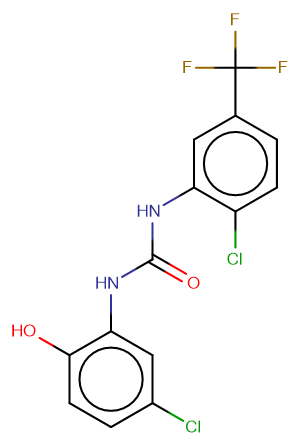
NS 1738
CAS No. 501684-93-1
NS 1738( NSC 213859 )
Catalog No. M21151 CAS No. 501684-93-1
NS 1738 is a positive allosteric modulator of the α7-containing neuronal nicotinic acetylcholine receptors (nAChRs).
Purity : >98% (HPLC)
 COA
Datasheet
HNMR
HPLC
MSDS
Handing Instructions
COA
Datasheet
HNMR
HPLC
MSDS
Handing Instructions
| Size | Price / USD | Stock | Quantity |
| 5MG | 42 | Get Quote |


|
| 10MG | 76 | Get Quote |
|
| 25MG | 155 | Get Quote |
|
| 50MG | 264 | Get Quote |
|
| 100MG | 447 | Get Quote |
|
| 200MG | Get Quote | Get Quote |
|
| 500MG | Get Quote | Get Quote |
|
| 1G | Get Quote | Get Quote |
|
Biological Information
-
Product NameNS 1738
-
NoteResearch use only, not for human use.
-
Brief DescriptionNS 1738 is a positive allosteric modulator of the α7-containing neuronal nicotinic acetylcholine receptors (nAChRs).
-
DescriptionNS 1738 is a positive allosteric modulator of the α7-containing neuronal nicotinic acetylcholine receptors (nAChRs).
-
In VitroNS 1738 acts by increasing the peak amplitude of acetylcholine (ACh)-evoked currents at all concentrations; thus, it increased the maximal efficacy of ACh. Plotting peak current amplitude against the logarithm of the NS 1738 concentration used for preincubation reveals a sigmoidal concentration-response relationship that is well fit by the Hill equation (EC50=3.4 μM). Under similar experimental conditions, NS 1738 shows comparable efficacy and potency at the rat α7 nAChR (EC50=3.9 μM).
-
In VivoTo estimate the ability of NS 1738 to permeate the blood-brain barrier, rats are administered 10 mg/kg NS 1738 intraperitoneally. Peak brain concentrations are measured approximately 30 min after injection, and they amount to ~80 ng/mL (~200 nM) at this dose. The ratio between the amount of compound entering the brain and that in plasma is AUCbrain /AUCplasma=0.50. The half-life in plasma is estimated to 42 min. Incubation of NS1738 with isolated liver microsomes in vitro indicates that approximately 60 and 75% of NS 1738 is metabolized via the cytochrome P450 system in mouse and rat, respectively, within 1 h. Adult rats administered NS 1738 at 10 and 30 mg/kg i.p. immediately following the initial exposure to a juvenile rat (T1) display significant decreases in the investigative duration of a subsequent exposure to the same juvenile (T2) 2 h later (T2/T1 ratio of 0.69±0.13 and 0.61±0.07, respectively).
-
SynonymsNSC 213859
-
PathwayEndocrinology/Hormones
-
TargetAChR
-
RecptornAChR
-
Research Area——
-
Indication——
Chemical Information
-
CAS Number501684-93-1
-
Formula Weight365.14
-
Molecular FormulaC14H9Cl2F3N2O2
-
Purity>98% (HPLC)
-
SolubilityDMSO:300 mg/mL (821.63 mM)
-
SMILESO=C(Nc1cc(Cl)ccc1O)Nc1cc(C(F)(F)F)ccc1Cl
-
Chemical Name3-(5-chloro-2-hydroxyphenyl)-1-[2-chloro-5-(trifluoromethyl)phenyl]urea
Shipping & Storage Information
-
Storage(-20℃)
-
ShippingWith Ice Pack
-
Stability≥ 2 years
Reference
1.Timmermann D B Gronlien J H Kohlhaas K L et al. An Allosteric Modulator of the ?7 Nicotinic Acetylcholine Receptor Possessing Cognition-Enhancing Properties in Vivo[J]. Journal of Pharmacology and Experimental Therapeutics 2007 323(1):294-307.
molnova catalog



related products
-
Sodium Glucuronic Ac...
Sodium Glucuronic Acid is used in the treatment of hepatitis and liver cirrhosis.
-
α-Bungarotoxin
Neurotoxin that blocks neuromuscular transmission via irreversible inhibition of nicotinic ACh receptors (nAChRs). Prevents opening of nicotinic receptor-associated ion channels and is selective for α7 receptors over α3β4 receptors (IC50 values are 1.6 nM and > 3 μM respectively).
-
VU0238441
VU0238441 is agonist of Muscarinic acetylcholine receptor M5 (human) with?EC50 of 2.1μM.
